Introduction
Kouskousi is a food-related term commonly associated with couscous, a traditional dish made from small granules of semolina. Although the spelling Kouskousi is not universally standardized, it is often discussed in connection with North African and Mediterranean food traditions. Understanding the term requires exploring the ingredients, cooking methods, and regional dishes associated with couscous.
Couscous is popular because it is versatile, easy to combine with different ingredients, and suitable for many types of meals. It can be served with vegetables, chickpeas, meat, fish, or flavorful sauces. Its mild taste allows it to absorb the flavors of the foods and seasonings served alongside it.
Today, couscous is enjoyed in many countries and is available in traditional and instant forms. Learning about Kouskousi provides an opportunity to understand this food’s culinary background, nutritional characteristics, preparation methods, and cultural importance.
What Is Kouskousi?
Kouskousi is a term associated with couscous and similar semolina-based foods. In many contexts, it may refer to couscous itself, while similar regional names can describe small pasta products. Therefore, its precise meaning depends on the source and culinary tradition.
Traditional couscous is generally made from semolina obtained from durum wheat. The semolina is moistened and formed into small granules that are cooked until tender. The finished product has a light texture and a mild wheat flavor.
Although couscous resembles rice, it is not technically a grain in the same way as rice. It is a processed wheat product that is closer to pasta. Its texture makes it suitable for serving with stews, vegetables, legumes, and different protein sources.
When researching Kouskousi, it is useful to check the product description, ingredients, and cooking instructions. These details help identify whether the term refers to traditional couscous or another type of small pasta.
The Origin and History of Kouskousi
The best-documented culinary tradition associated with Kouskousi is North African couscous. This food has a long history in the Maghreb, particularly in Morocco, Algeria, Tunisia, and Mauritania.
For generations, families have prepared couscous using techniques passed down through their communities. Traditional preparation requires attention to the texture of the semolina, the amount of moisture, and the steaming process.
Different regions have developed distinctive recipes based on local ingredients and preferences. Some preparations emphasize vegetables and aromatic spices, while others feature meat, fish, or rich sauces. These variations demonstrate how one basic food can become part of many culinary traditions.
The exact historical origin of the spelling Kouskousi is not clearly established. It is therefore more accurate to discuss its relationship with couscous rather than assign the spelling a specific inventor or date.
Over time, couscous spread internationally through migration, trade, restaurants, and cultural exchange. It is now enjoyed in homes and restaurants around the world.
Main Ingredients Used in Kouskousi
The ingredients depend on the particular product and recipe. Traditional couscous dishes commonly include several basic components.
Semolina
Semolina is the principal ingredient in traditional wheat couscous. It is usually produced from durum wheat and gives couscous its characteristic small granules. The size of the granules and the preparation method influence the final texture.
Vegetables
Carrots, zucchini, onions, tomatoes, pumpkin, and other seasonal vegetables are popular additions. They contribute color, flavor, and nutrients to the dish.
Chickpeas and Legumes
Chickpeas are common in North African couscous recipes. They add texture, protein, and dietary fiber. Beans and other legumes can also be used in suitable variations.
Spices and Herbs
Cumin, coriander, paprika, turmeric, and black pepper can enhance the flavor. Fresh parsley and other herbs provide freshness, while olive oil adds richness.
Meat and Fish
Some recipes include lamb, chicken, beef, or fish. These ingredients are optional, and vegetarian versions can be prepared with vegetables, chickpeas, and vegetable broth.
How Kouskousi Is Traditionally Prepared
Traditional couscous preparation involves several stages. First, semolina is moistened and rolled into small granules. The granules are separated to prevent large clumps from forming.
A traditional cooking vessel called a couscoussier is designed to steam couscous above a pot containing simmering liquid. The rising steam gradually cooks the granules and helps them become tender.
Depending on the regional method, couscous may be steamed more than once. Between steaming stages, the granules can be gently separated to improve their texture.
Once prepared, couscous is served with vegetables, legumes, meat, fish, or broth. The accompanying ingredients depend on local customs and personal preferences.
Instant couscous offers a quicker alternative. It is usually pre-cooked and dried, so it can be prepared by adding hot liquid and allowing it to absorb the moisture. This convenient method differs from traditional steaming.
An Easy Kouskousi Recipe
A simple couscous recipe is suitable for beginners who want to prepare a quick meal at home.
Ingredients
- One cup of instant couscous
- One cup of hot water or vegetable broth, adjusted to package instructions
- One small carrot, chopped and cooked
- Half a cup of cooked chickpeas
- One tablespoon of olive oil or butter
- Salt and black pepper to taste
- Fresh parsley and lemon juice, if desired
Preparation Method
First, place the instant couscous in a heatproof bowl. Heat the water or vegetable broth and pour it over the couscous according to the package instructions.
Cover the bowl and let the couscous absorb the liquid. The resting time is often around five minutes, although the manufacturer’s directions should take priority.
Next, fluff the couscous gently with a fork. Add the cooked carrot, chickpeas, olive oil, salt, and black pepper. Mix everything thoroughly.
Finish with chopped parsley and a little lemon juice if desired. Serve warm as a side dish or add more vegetables and a suitable protein source to make it a complete meal.
This method is intended for instant couscous. A small pasta product sold under a similar name may require boiling instead.
Popular Ways to Serve Kouskousi
Kouskousi-style dishes can be prepared in many ways, depending on the ingredients and culinary tradition.
Moroccan-Style Couscous
Moroccan couscous is commonly served with vegetables, chickpeas, and seasoned broth. Some recipes include lamb or chicken. The ingredients are combined to create a filling meal with a variety of textures.
Couscous With Chicken
Chicken couscous combines tender couscous with cooked chicken, vegetables, and flavorful broth. Herbs and spices can be adjusted according to individual preferences.
Mediterranean Couscous Salad
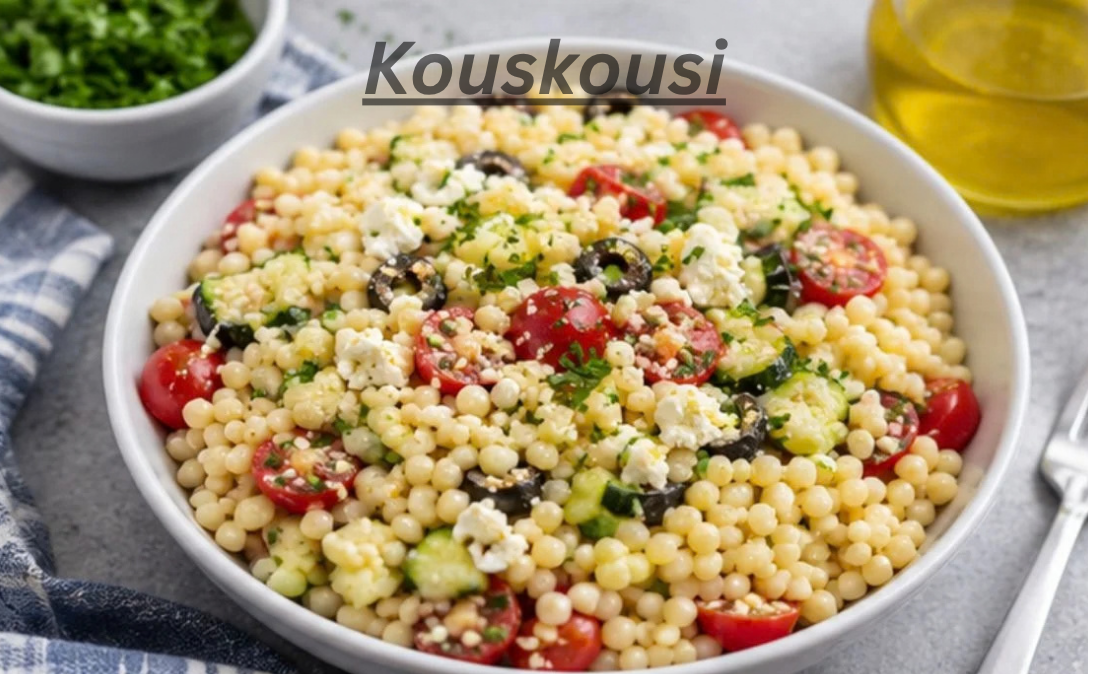
A Mediterranean-style salad may include couscous, cucumber, tomatoes, parsley, lemon juice, and olive oil. It can be served chilled or at room temperature and makes a convenient lunch or side dish.
Vegetarian Couscous
Vegetarian couscous uses chickpeas, beans, roasted vegetables, herbs, and spices. It is a flexible choice for people who prefer meals without meat.
Nutritional Value of Kouskousi
The nutritional value of Kouskousi depends on the exact product and its ingredients. Traditional wheat couscous mainly provides carbohydrates, along with some protein and smaller amounts of other nutrients.
Carbohydrates supply energy for everyday activities. Wheat couscous also contributes protein, although combining it with chickpeas, beans, fish, eggs, or meat can increase the protein content of a meal.
Vegetables and legumes provide additional fiber, vitamins, and minerals. These ingredients can make a couscous dish more varied and nutritionally balanced.
However, couscous is not automatically a high-fiber or low-calorie food. Its nutritional profile depends on portion size and additions such as butter, oil, salt, and rich sauces.
Traditional couscous made from wheat contains gluten. People with celiac disease or other medical reasons to avoid gluten should select a suitable gluten-free alternative and check product labels carefully.
What Is the Difference Between Kouskousi and Couscous?
The difference depends on the context in which the terms are used.
When Kouskousi is used as an alternative spelling associated with couscous, both terms may refer to the same semolina-based food. In other contexts, a similar regional name may refer to small pasta.
Traditional North African couscous consists of small granules that are generally steamed. Instant couscous is usually prepared by adding hot liquid and allowing it to absorb the moisture.
Small pasta products have different shapes and may need to be boiled in water or broth. Although these foods may look similar, their ingredients and preparation methods can differ.
Checking the package description, ingredients, and cooking instructions is the most reliable way to identify a particular product.
Cultural Significance of Couscous
Couscous is an important part of North African food culture. Its significance extends beyond its ingredients because preparing and sharing it involves traditional knowledge, family practices, and hospitality.
In many communities, preparation techniques have been passed from one generation to another. Family members may work together to prepare the semolina, cook vegetables, season broth, and assemble the final dish.
Couscous is served during everyday meals as well as gatherings and celebrations. Although recipes vary between regions and families, sharing food remains an important part of its cultural role.
In 2020, UNESCO recognized the knowledge, skills, and practices associated with couscous production and consumption as Intangible Cultural Heritage. The joint nomination involved Algeria, Mauritania, Morocco, and Tunisia.
This recognition highlights the traditional knowledge and social practices connected with preparing and sharing couscous.
Buying and Storing Kouskousi
When buying Kouskousi, check the packaging to determine whether the product is traditional couscous, instant couscous, or small pasta. Different products may require different cooking methods.
Dry products should generally be stored in a cool, dry place away from moisture and direct sunlight. After opening the package, keep it in a tightly sealed container.
Cooked couscous should be refrigerated promptly in a covered container. As a general food-safety guideline, refrigerate leftovers within two hours and use them within three to four days. Reheat leftovers thoroughly before serving.
Following the manufacturer’s instructions helps maintain quality and reduces the risk of food spoilage.
Conclusion
Kouskousi is a food-related term commonly associated with couscous, a versatile semolina-based food with deep roots in North African culinary traditions. Similar regional terms may also refer to small pasta products, so the exact meaning depends on the context.
Couscous can be served with vegetables, chickpeas, meat, fish, and flavorful sauces. Its adaptable ingredients make it suitable for traditional dishes, modern salads, and quick everyday meals.
Beyond its culinary uses, couscous represents an important cultural tradition involving preparation skills, family knowledge, and shared meals. Understanding its ingredients, cooking methods, and regional variations provides a clearer appreciation of the food and its place in culinary history.
Frequently Asked Questions
1. What is Kouskousi?
Kouskousi is a term associated with couscous and similar semolina-based foods. Depending on the context, it may refer to traditional couscous or a small pasta product.
2. Where does Kouskousi originate?
When the term refers to traditional couscous, its culinary background is associated with North Africa, particularly Morocco, Algeria, Tunisia, and Mauritania.
3. Is Kouskousi the same as couscous?
Sometimes. The terms may be used interchangeably, but similar regional names can describe different pasta products. Checking the ingredients and cooking instructions helps identify the food.
4. Is Kouskousi healthy?
Couscous can be part of a balanced diet. It provides carbohydrates and some protein, while vegetables and legumes add fiber and other nutrients. Its overall nutritional value depends on the portion size and preparation.
5. How do you cook Kouskousi?
Instant couscous is usually prepared by adding hot water or broth, covering it, and allowing it to absorb the liquid. Traditional couscous may require steaming, while pasta-style products generally need boiling.